The Great Gold Robbery
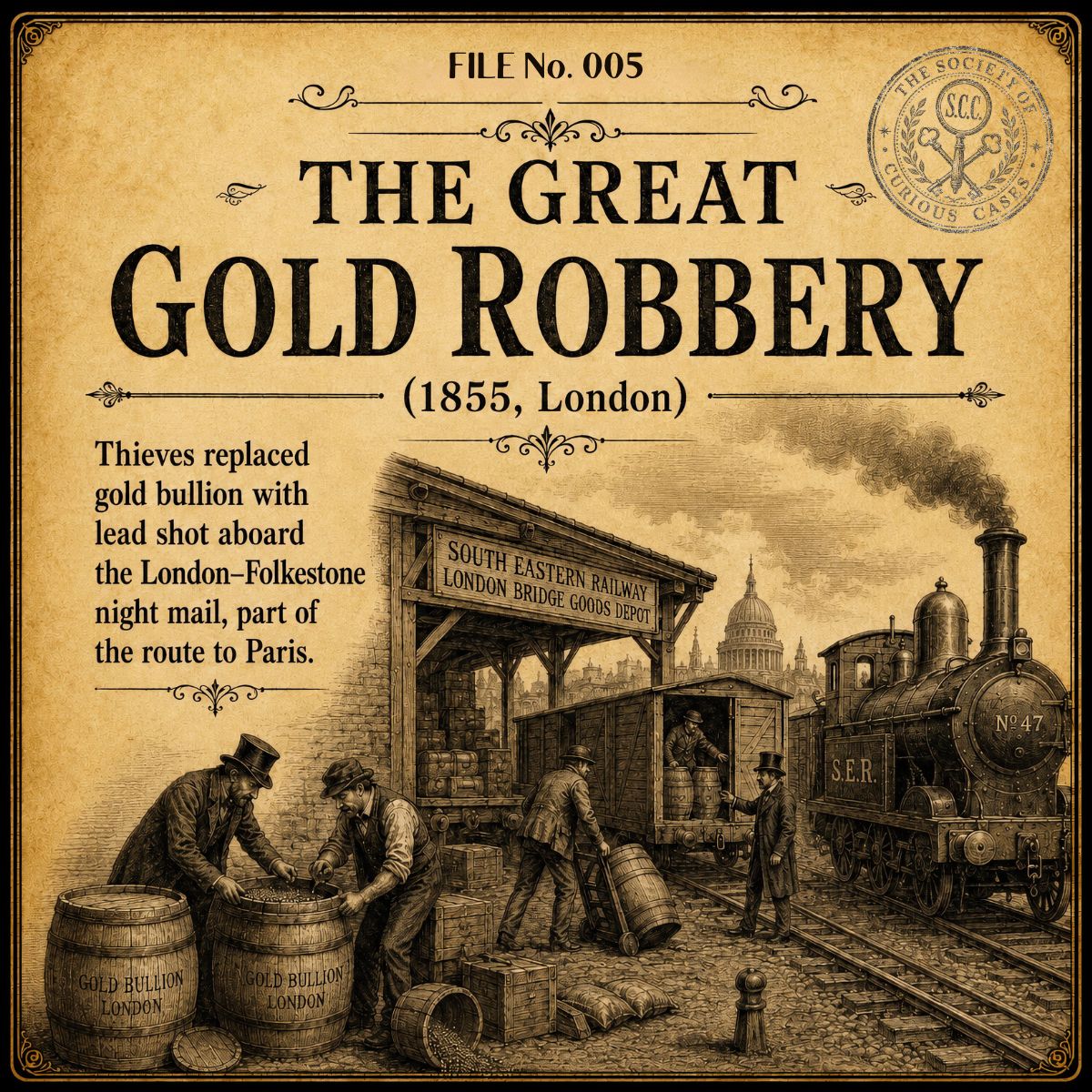
On the night of 15 May 1855, three sealed and weighed boxes of gold bullion and coin left London Bridge station aboard the South Eastern Railway's boat train, bound for Folkestone and Paris. The gold travelled in iron safes secured with two locks apiece, their keys held separately.
When the boxes reached Boulogne, they were unlocked, weighed, and passed on without obvious alarm. Three days later in Paris, a bank clerk opened them and found the gold gone — replaced with ordinary lead shot. The boxes were undamaged, the seals intact, and the locks showed no force.
The robbery was the work of Edward Agar, William Pierce, guard James Burgess, and clerk William Tester. They had spent months obtaining impressions of the safe keys and waiting for a sufficiently valuable shipment.
The Curious Detail
Agar worked in the guard's van under Burgess's spare overalls, opening the bullion boxes so carefully that they appeared untouched when examined later.
The conspiracy unravelled only after Pierce failed to pass money to Agar's partner, Fanny Kay, and her complaint brought the scheme to light.
The Society invites your verdict.
Fact or Fiction?
The Society's classification is supported by Old Bailey trial records and the surviving bullion box, still containing lead shot, held by the Science Museum Group.