The Case of the Duplicate Widow
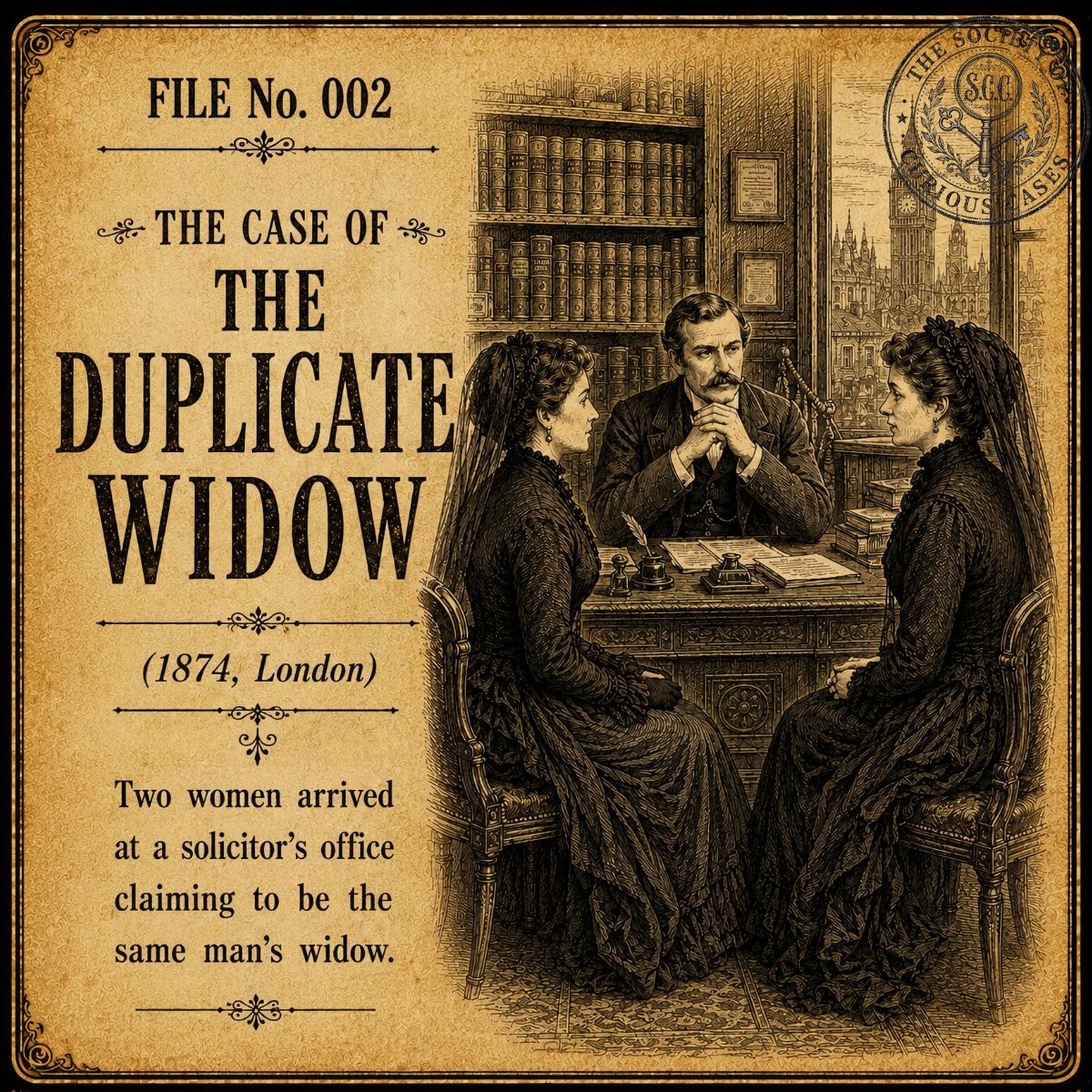
In the spring of 1874, a solicitor in the City of London kept an appointment he would later describe, in his own private notes, as the strangest of his career. Two women arrived within minutes of one another, each dressed in mourning, each carrying a marriage certificate, and each insisting she was the lawful widow of the same recently deceased gentleman, a merchant of modest but respectable fortune. Neither woman had been told the other was expected.
The estate in dispute was not vast, but it was enough to matter: a house in Islington, a small holding of railway shares, and whatever remained of a business the dead man had run under three different trading names over the course of his life. Under the law of the day, the matter turned entirely on documentation.
Both certificates produced were correctly formed: proper parish registrations, dated eleven years apart, naming the same man under two closely related versions of his name. The parish registers matched both certificates exactly. There was no forgery. The man had married both women and had never been widowed, divorced, or otherwise released from the first marriage before entering the second.
The Curious Detail
By the strict letter of the law, only the first wife could be his true widow; the second marriage was void from the outset. Yet the solicitor's private notes record one detail he could never satisfactorily explain: both women, independently and without prompting, described the same small scar above their late husband's left eyebrow — a mark from a childhood accident, they each said, that he rarely spoke of.
A solicitor's private notes, two valid certificates, and a dead man with, it seems, more than one life behind him. Whether that detail proves anything at all, the file does not say.
The Society invites your verdict.
Fact or Fiction?
This case is a fabrication created for the Society Archive. The legal backdrop is genuine, but the dispute and the solicitor who recorded it exist only in this file.